
What is Biofeedback?
Biofeedback is a non-invasive technique that uses electronic sensors to monitor physiological signals such as heart rate, breathing, muscle activity, skin conductance (GSR), and temperature. These measurements are displayed in real time, helping individuals learn self-regulation skills through guided training. Biofeedback is widely used in healthcare, sports psychology, rehabilitation, stress management, and research.
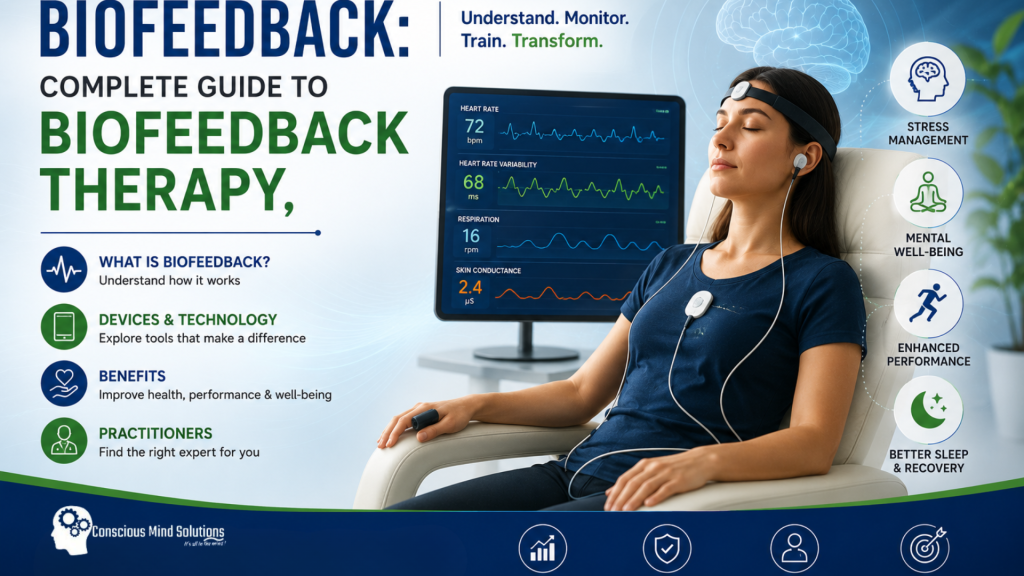
Table of Contents
- What is Biofeedback?
- How Does Biofeedback Work?
- Types of Biofeedback
- What are Biofeedback Devices?
- Biofeedback Therapy
- Benefits of Biofeedback
- Applications of Biofeedback
- Who Can Benefit?
- Biofeedback Practitioner
- Biofeedback in India
- Choosing the Right Biofeedback Device
- Biofeedback vs Neurofeedback
- Frequently Asked Questions
- Why Choose Conscious Mind Solutions?
- Final Thoughts
What is Biofeedback?
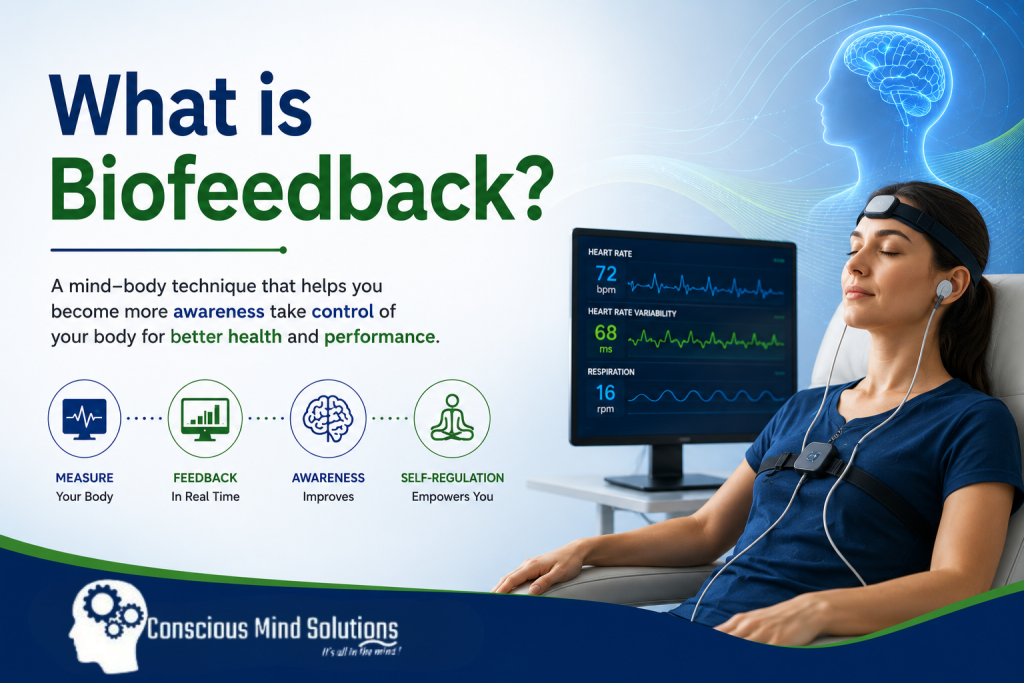
Biofeedback is a scientifically supported, non-invasive training method that helps individuals become aware of and learn to regulate physiological functions that are normally automatic, such as heart rate, breathing, muscle tension, skin conductance, and body temperature. Using specialized biofeedback devices, real-time physiological information is displayed through software, enabling individuals to practice self-regulation techniques under the guidance of a trained biofeedback practitioner.
Rather than masking symptoms, biofeedback therapy teaches individuals how to influence their body’s stress response, improve relaxation, enhance emotional regulation, and optimize performance. It is widely used by psychologists, physiotherapists, sports psychologists, rehabilitation professionals, researchers, and healthcare organizations around the world.
As awareness continues to grow, biofeedback in India is becoming increasingly popular across hospitals, mental health clinics, sports academies, educational institutions, and corporate wellness programs.
How Does Biofeedback Work?
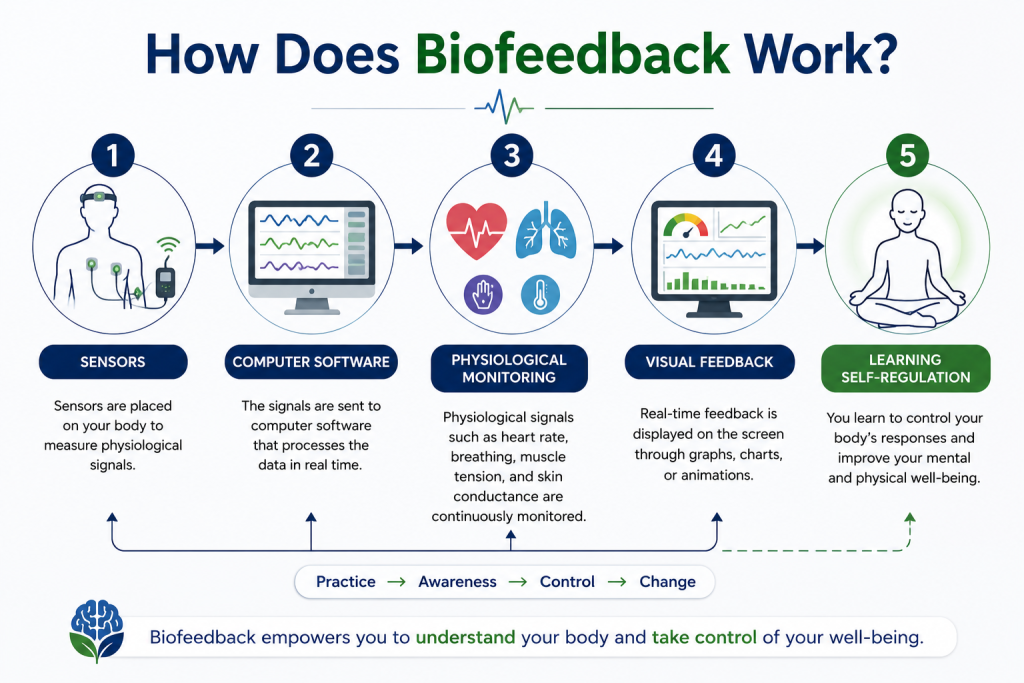
The human body constantly produces measurable physiological signals. During biofeedback therapy, sensors are placed on different parts of the body to monitor these signals.
Depending on the type of biofeedback device, the system may measure:
- Heart Rate Variability (HRV)
- Galvanic Skin Response (GSR)
- Respiration
- Muscle Activity (EMG)
- Peripheral Temperature
- Brain Activity (EEG)
These measurements are displayed in real time through specialized software using graphs, animations, sounds, or interactive exercises. As individuals practice relaxation techniques, breathing exercises, or other self-regulation strategies, they immediately see how their physiological responses change. Over time, this feedback helps develop greater awareness and voluntary control of these responses.
Why is Biofeedback Important?
Modern lifestyles expose people to chronic stress, demanding work environments, academic pressure, and competitive sports. These challenges often affect the body’s autonomic nervous system.
Biofeedback helps individuals recognize these physiological responses and develop healthier patterns through guided training. Instead of simply reacting to stress, users learn practical skills that can improve resilience and self-regulation over time. For healthcare professionals, biofeedback also provides objective physiological data that can support assessment, training, and progress monitoring.
Types of Biofeedback
Heart Rate Variability (HRV) Biofeedback
HRV biofeedback focuses on improving the balance of the autonomic nervous system by training individuals to regulate breathing and heart rate patterns.
Common applications include:
- Stress management
- Emotional regulation
- Performance optimization
- Relaxation training
- Workplace wellness
Galvanic Skin Response (GSR) Biofeedback
GSR biofeedback measures changes in skin conductance associated with emotional arousal.
Applications include:
- Stress monitoring
- Anxiety management
- Meditation training
- Emotional awareness
- Performance psychology
Electromyography (EMG) Biofeedback
EMG biofeedback measures electrical activity within muscles.
It is commonly used in:
- Physical rehabilitation
- Muscle relaxation training
- Sports performance
- Postural awareness
- Physiotherapy programs
Respiration Biofeedback
Respiration biofeedback helps individuals improve breathing patterns and develop controlled breathing techniques.
It is frequently incorporated into stress management and performance enhancement programs.
Temperature Biofeedback
Temperature biofeedback monitors peripheral skin temperature, which may reflect changes in blood circulation and relaxation responses.
EEG Biofeedback (Neurofeedback)
EEG biofeedback, commonly known as neurofeedback, focuses on monitoring brainwave activity and training specific brainwave patterns using specialized neurofeedback systems.
What are Biofeedback Devices?
Biofeedback devices are specialized systems that measure physiological signals and provide immediate feedback through software.
Professional biofeedback devices typically include:
- High-quality sensors
- Real-time monitoring software
- Interactive training modules
- Reporting features
- Data recording
- Multi-channel physiological monitoring
Modern clinical systems may monitor several physiological signals simultaneously, allowing practitioners to develop comprehensive training protocols.
Types of Biofeedback Devices
Clinical Biofeedback Systems
Designed for hospitals, clinics, universities, rehabilitation centres, and research organizations.
Portable Biofeedback Devices
Compact systems suitable for mobile training and field-based applications.
Wearable Biofeedback Devices
Consumer-oriented devices designed for personal monitoring and basic physiological awareness.
Multi-Channel Biofeedback Systems
Professional systems capable of simultaneously monitoring multiple physiological parameters such as HRV, EMG, GSR, respiration, and temperature.
Biofeedback Therapy: What Happens During a Session?
A typical biofeedback therapy session includes:
- Initial consultation and assessment
- Selection of appropriate physiological sensors
- Baseline physiological measurements
- Guided breathing or relaxation exercises
- Real-time feedback using specialized software
- Progress monitoring
- Discussion of strategies for continued practice
The exact structure varies depending on the individual’s goals and the professional conducting the session.
Benefits of Biofeedback
Biofeedback has been incorporated into a wide range of clinical, educational, and performance settings. Potential benefits may include:
- Improved awareness of physiological responses
- Better stress management skills
- Enhanced relaxation
- Improved breathing patterns
- Greater emotional regulation
- Increased focus and concentration
- Support for rehabilitation programs
- Performance optimization
- Better self-regulation
The effectiveness of biofeedback depends on factors such as the individual’s goals, consistency of practice, and guidance from qualified professionals.
Who Can Benefit from Biofeedback?
Biofeedback is used across multiple disciplines.
Mental Health Professionals
Psychologists and counsellors may integrate biofeedback into broader therapeutic approaches.
Physiotherapists
EMG biofeedback can support muscle awareness and rehabilitation programs.
Sports Psychologists
Athletes often use biofeedback to improve concentration, recovery, and performance readiness.
Schools and Universities
Educational institutions may use biofeedback for research, student wellness initiatives, and psychology training.
Hospitals and Rehabilitation Centres
Biofeedback systems can be incorporated into multidisciplinary rehabilitation and wellness programs.
Corporate Wellness Programs
Organizations increasingly use biofeedback training as part of employee wellness initiatives.
What Does a Biofeedback Practitioner Do?
A biofeedback practitioner is a trained professional who uses physiological monitoring equipment to guide individuals through biofeedback training sessions.
Their responsibilities often include:
- Conducting assessments
- Selecting appropriate sensors
- Monitoring physiological signals
- Teaching breathing and relaxation techniques
- Tracking progress over multiple sessions
- Integrating biofeedback with broader therapeutic or training goals
Practitioners may come from backgrounds such as psychology, physiotherapy, occupational therapy, sports science, rehabilitation, or medicine, depending on their scope of practice and local regulations.
Biofeedback in India
Interest in biofeedback in India has grown significantly over recent years due to increasing awareness of mental health, stress management, sports psychology, and rehabilitation.
Biofeedback technology is now used in:
- Mental health clinics
- Sports academies
- Hospitals
- Universities
- Rehabilitation centres
- Research institutions
- Corporate wellness programs
Professional biofeedback systems are becoming more accessible, enabling organizations to implement evidence-informed physiological training programs.
How to Choose the Right Biofeedback Device
When selecting a biofeedback device, consider:
- Clinical or educational purpose
- Physiological parameters required
- Number of monitoring channels
- Software capabilities
- Reporting features
- Sensor quality
- Ease of use
- Technical support
- Training availability
- Future scalability
Choosing a professional-grade system with reliable support and training is especially important for healthcare organizations and educational institutions.
Biofeedback vs. Neurofeedback
Although often mentioned together, biofeedback and neurofeedback are not identical.
| Biofeedback | Neurofeedback |
| Monitors physiological signals such as HRV, GSR, EMG, respiration, and temperature | Specifically measures brainwave activity (EEG) |
| Focuses on body self-regulation | Focuses on brainwave training |
| Used in multiple healthcare and performance settings | Primarily used in neurological and cognitive training applications |
Frequently Asked Questions
Is Biofeedback safe?
Biofeedback is generally considered a non-invasive approach. Individuals should consult qualified healthcare professionals to determine whether it is appropriate for their specific circumstances.
Is Biofeedback the same as Neurofeedback?
No. Neurofeedback is a specialized form of biofeedback that focuses specifically on brainwave activity.
Who can perform Biofeedback Therapy?
Biofeedback therapy should be conducted by trained professionals who have appropriate education and experience in using biofeedback systems.
What conditions can Biofeedback help with?
Biofeedback is commonly used for stress management, relaxation training, rehabilitation, performance enhancement, and physiological self-regulation. Its suitability depends on the individual’s goals and professional guidance.
How long does Biofeedback training take?
The number of sessions varies depending on individual objectives, the training plan, and the professional providing the service.
Can Biofeedback be used with other therapies?
Yes. Biofeedback is often integrated with psychological interventions, physiotherapy, rehabilitation programs, mindfulness practices, and wellness initiatives.
Why Choose Conscious Mind Solutions?
Conscious Mind Solutions is committed to advancing the adoption of professional biofeedback technologies in India. We provide high-quality biofeedback devices, practitioner training, installation support, and technical guidance for psychologists, hospitals, universities, rehabilitation centres, sports organizations, and research institutions.
Our goal is not only to supply technology but also to help professionals implement biofeedback effectively through education, ongoing support, and evidence-informed practices.
Whether you are establishing a new biofeedback clinic, expanding your psychological services, or looking for advanced biofeedback solutions, our team can help you identify the most suitable system for your requirements.
Final Thoughts
Biofeedback empowers individuals to better understand their physiological responses and develop practical self-regulation skills through real-time feedback. With advancements in technology and growing awareness, biofeedback has become an important tool in healthcare, education, rehabilitation, sports psychology, and wellness programs.
As interest in biofeedback continues to expand worldwide and across India, access to professional biofeedback devices, qualified practitioners, and evidence-based training will play an increasingly important role in supporting individuals and organizations seeking measurable physiological insights and long-term performance and well-being.